Thursday, March 31, 2011

Sounds of Silence Always Appreciated

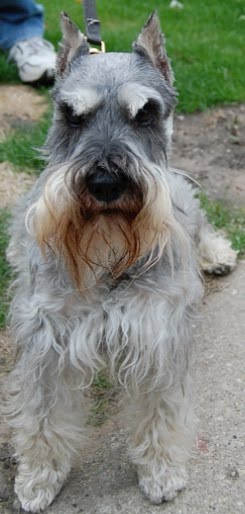
This is Mozart, our pooch’s friend and the closest thing to music she would tolerate.

We had no theme song for the pooch as we did for the cat. Oh, we tried to get something going to the tune of “How Do You Solve A Problem Like Maria?” But the poor canine got nervous at the sound of music, canned or live. All of which I was reminded of when I found this passage in a journal the other day. If I remember correctly, the pooch and I were sitting on the beach together.

My pooch just gave me her “Knock it off!” look. I took the hint and stopped humming. She turned away from me and loudly “Hrrrmphed,” which in this context meant “Sheesh! You’d think she’d know better by now! What’s a dog got to do to get a little obedience out of people?”

No Silver Spoon for Me


“He who is born with a silver spoon in his mouth is generally considered a fortunate person, but his good fortune is small compared to that of the happy mortal who enters this world with a passion for flowers in his soul.”
—Celia Thaxter

Tuesday, March 29, 2011

My Rescue from March Madness

Have you been struck by March Madness yet? It hit me at my library branch, which had a display of madness-related books just inside the entrance.

The first book I noticed was The Art of Spelling: The Madness and the Method by Marilyn vos Savant. Next was The Professor and the Madman: A Tale of Murder, Insanity, and the Making of the Oxford English Dictionary by Simon Winchester.

I chuckled. Obviously, the words madness and madman in their titles had clinched their position in the display. I was happy to see a couple of language-related books in the mix.

Other books were either sports- or horror-related, except one: William Styron’s seminal work on depression, Darkness Visible: A Memoir of Madness. Who would put such a serious read on such a delicate topic in the middle of a tongue-in-cheek exhibit? It seemed so wrong, so inappropriate.

So I rescued it. I swept Styron off the easel and considered reshelving him. Then it occurred to me that though Darkness Visible had been referenced and excerpted in much of my reading over the years, I’d never actually read it. So I checked it out.

Darkness Visible opened the doors to a taboo subject in the last century and a new genre of memoir. Since its publication, battles with depression have been divulged by many and illuminated well by a few. If you’re looking for a good book on this dark subject, there are lots to choose from now—though none as slim, perhaps, as Darkness Visible.

I switch-read between Styron and A Small Furry Prayer, whose author, Steven Kotler, excerpted Styron’s descriptive powers to explain the deep funk that had befallen Kotler after his loss of seven or more dogs. Suddenly I was reading Styron in two books. My book choices were growing ever more connected. (Another connection between the two: Styron wrote Sophie’s Choice, which is the term rescuers use when choosing a single shelter animal—destined for death—and commit it to their care. My own pooch was a Sophie’s Choice.)

I thought again about the March Madness display. Of course, in my initial overreaction, I had missed the fact that madness is in the subtitle of Styron’s work. But I also missed its similarity to the language books. Libraries, like grocery stores and retailers, use endcaps to push product—in this case, reading. College basketball was only the hook, but once reeled in, library members had an array of choices on that tiered table. And librarians made certain that the array included books that might go unnoticed or ignored by readers who rarely strayed from their preferred genres. Kind of like slipping a few pieces of nutritious broccoli alongside that grilled shrimp you know your kids adore.

The Professor and the Madman had tapped my memory because I’d read it years ago. The Art of Spelling had caught my eye because I know someone who’s working on her GED; the book might be useful to her. As could the Styron book for someone else, someone who may not realize a book exists that clearly expresses the chokehold they feel and try to hide. This was the librarian’s intent.

Geez. I realize now that I didn’t rescue anything. But if I race Darkness Visible back to the library, maybe Styron can.

[Drawing by Albrecht Dürer.]
Random Connections

I just stumbled upon this quotation and saved it:

“No cow’s like a horse, and no horse like a cow. That’s one similarity, anyhow.”
Piet Hein

It fits with the “every creature’s an individual” philosophy that’s been on my mind. Then, forgetting about it, the next page I opened on the Web displayed this photo:


How perfect is that? So I had to share it.

It’s Shreve Stockton, author of The Daily Coyote: A Story of Love, Survival, and Trust in the Wilds of Wyoming and creator of Honey Rock Dawn. Beneath the photo is a beautiful story about one day near her ranch in Wyoming—births and deaths, difficult decisions and Good Samaritans, horses and cows, knowledge and intuition all intersecting and building something new. Please read it. It will lift your spirits.

First Step Toward New Goals

poet I met here in Horseyland called me one day in January. She wanted to let me know about a workshop that was starting up and encourage me to join in order to meet some like-minded folks.

I did. The workshop is a kind of Weight Watchers for artists—only instead of losing weight, we’re working on achieving our goals (or dreams, as the brochure copy described it).

Didn’t matter to me. I couldn’t tell one from the other at that point and figured that by going to the meetings, I might actually GET a goal or two to work toward.

(I hesitate to write about this on Lull because, as if it weren’t bad enough to commit to my goals in front of a bunch of writers at a roundtable in the Bluegrass, I’m now committing to my goals on a global level. Mind you, I’m taking this V E R Y S L O W L Y. Be patient.)

One of the baby steps toward my larger goals was to submit a bit of writing to a Web site. I chose the Animal Rescue Site (you know, the one you click through to from the purple paw at right to donate food to animal shelters). I wrote a tiny animal rescue tale—the story of how I adopted my first cat in fewer than 300 words—and posted it. You can see it on the site by selecting the tab “Animal Rescue Stories” and scrolling down to “The Lie I Took Home With Me.”

Though there was space for it, I omitted my cat’s theme song. We used to sing it to her—to the tune of Flipper’s theme song—to calm her (you have to read her story to understand this):

They call her Precious, Precious
Whiter than snowflakes

Sweeter than honey

Looks like a bunny


They call her Precious, Precious

Afraid of bubbles

Knows all your troubles

She’s the empathy cat.


At any rate, this tiny step feels big to me. And though it hasn’t built much momentum, it has nudged me to take control and continue the cause. For as Robert A. Heinlein wrote:

“In the absence of clearly-defined goals, we become strangely loyal to performing daily trivia until ultimately we become enslaved by it.”

Monday, March 28, 2011

Taking the Easy Route to Problem-Solving

We just received the last three issues of National Geographic Magazine (a glitch I caused by renewing late) and in one was this photograph:


If you live in the Chesapeake Bay area, you probably know all about the cownose ray. But I’d never heard of the creature. And though lots of unusual critters parade through NGM pages over a year, none has captivated me quite the way this ray has.

The sharks that keep the ray’s numbers in check are on the decline. Now, without a predator on their tails, the rays are using the Bay as their personal kitchen—eating shellfish and mussing up the habitat of other marine wildlife. The local fishing industry has, understandably, deemed the ray a pest, though the damage has yet to be quantified. There’s already talk about putting the cownose ray on restaurant menus (resembles tuna, according to a taste test), but the ray would have to be renamed—something more palatable like “Chesapeake Ray.”

Clever, hunh? We can be imaginative when it comes to spin, but not so much when it comes to real problem-solving.

Look at that mug again. It’s homely, haunting, melancholic, otherworldly. There should be a cownose puppet for cownose advocacy. Surely there’s some way of preventing yet another creature from becoming a human’s lunch…

Sunday, March 27, 2011

Be All That You Can Be: READ

“In the case of good books, the point is not how many of them you can get through, but rather how many can get through to you.”
—Mortimer J. Adler

wo books have recently changed my mood, my convictions, and quite possibly the direction of my career.

I’m bursting to discuss them with someone, but have yet to find anyone who’s read them. Both are ripe with anecdotes illustrating animals’ altruism. And both cite plenty of research confirming what many of us already knew: Animals are individuals who may be different from humans, but are not less than humans.

There’s heartache in both books, too. Of course, most of it stems from human stupidity and egocentricity. But there’s enough uplift to make you happy just to share this world with animals. And enough horror to prompt you to make a difference for them.

Please run to your nearest library and check out The Pig Who Sang to the Moon: The Emotional World of Farm Animals by Jeffrey Moussaieff Masson and A Small Furry Prayer: Dog Rescue and the Meaning of Life by Steven Kotler. (Try the paperback edition of A Small Furry Prayer. The hardcover has more typos in it than I thought possible for a publisher or typesetter to ignore.) The first is a quiet, lovely read; the second is a raucous, realistic look at dog rescuing—complete with foul sights, smells, and language. Both engage and enlighten.

While I can’t promise you the same profound experience I had with these books, I can promise you a stronger or altered sense of your place in the universe.

[Drop cap by Jessica Hische; photo from NASA.]

Saturday, March 26, 2011

Protect the Sisterhood—No Matter the Species

Premarin hit my radar a while ago in a New York Times series on menopause. It’s a popular hormone replacement that’s been on the market for women since 1942.

When the series was originally published, new research was making big news: For some women, Premarin was actually doing more harm than good. For me, the bigger news was that the drug, whose key ingredient is extracted from the urine of pregnant mares, had always harmed the horses who provided the product.

Upon further investigation, I learned what “isolated from horse urine” really meant:
Scores of pregnant mares are forced to stand 24/7 in a space not much larger than their bodies and are saddled with urine-collecting equipment. Once they produce a foal, they are made pregnant again and the foals are “removed”—a mere byproduct of the Premarin industry.

As my outrage mounted, I happened upon an article on the Web indicating that Premarin was no longer being manufactured. Whew! Was I ever relieved—not only for the horses, but for myself as well because I wasn’t sure how to take up the cause.

However, now I’ve learned that whatever it was I’d read was wrong.

Pfizer is still manufacturing Premarin and its family of drugs, including Prempro, and doctors are still prescribing it. What’s more, coming soon is Aprela, Pfizer’s new drug for osteoporosis which also relies on the urine of pregnant mares for its effectiveness. It awaits FDA clearance.

We all know that animals are sacrificed in laboratories in the name of drug development for our well-being. But how many are also sacrificed for the manufacturing of those drugs? And are we okay with this?

Here’s one woman’s remarks pulled from the NYT article:

I don’t care what symptoms I get, I’m not taking hormones. I have, right now in my pasture, three lovely mares that were rescued from a Premarin factory. Most people don’t know Premarin is made by cooping up mares in a dark, cramped stall, no exercise or socialization (these are herd animals by nature), keeping them pregnant, and when the foal is born – it is slaughtered right in front of its mother, so she can be re-impregnated right away. When the mother’s feet give out from standing still her whole life, she is slaughtered too. It’s horrific. One of my mares had a foal last spring and at first, didn’t pay attention to it; as soon as she realized she would get to keep this foal, she was the most attentive and nurturing mom you could imagine. All of them are outside now, cropping the spring grass and playing together. Like they should be. And this summer, they will be therapy horses helping the disabled children I work with.

There’s wind of Pfizer pulling its contracts from the North American stables that supply mare urine and moving the Premarin business to the European and Asian horse markets—where more profit may be had by all because the pesky byproduct of the operations (the foals) can be turned around quickly as a delicacy food item.

Plant-based alternatives to Premarin exist. But many doctors prescribe only what their favorite drug peddlers encourage them to.

I haven’t yet figured out what to do about Premarin except spread the word. Inform and educate the sisterhood. Close demand for the drug one person at a time. It’s the least I can do for our four-legged sisters.

Interested in reading more? Check out these sites:
Equine Voices Rescue & Sanctuary
International Fund for Horses
United Animal Nations

[Pics, top to bottom, from Mealrigg Hall Stud, Windsong Stud, Cosmopolitan Horse Farm, and Google Images.]

Thursday, March 24, 2011

Relief for Paws, Claws, Hooves, and Fins

When you click the purple button on the right (you’re still doing that, aren’t you?), you not only help feed shelter critters, you also get lots of options to help animals all over the world. The site has recently posted special methods of contributing aid to the pets of Japan.

I just learned of an organization called World Vets—sort of a Doctors Without Borders for animals. Right now they’re working with Humane Society International folks and local Japanese vets and shelters to provide assistance where and how it’s most needed. There was a special blog fund-raising drive on March 17 that was successful enough to crash the World Vets’ servers and frustrate potential donors. Though the tech problem has been fixed, the need for $$$ hasn’t.

I realize there’s no end to the organizations vying for your greenbacks. But it’s always good to know which ones will put your donations to the best use.

“Not to hurt our humble brethren is our first duty to them, but to stop there is not enough. We have a higher mission—to be of service to them whenever they require it...”
—Saint Francis of Assisi

[For a short introduction to disaster rescue work, read Dr. V’s column at Pawcurious. For an example of rescue mismanagement, read the latest about the Thoroughbred Retirement Foundation. For an unfiltered description of current rescue work in Japan, visit Pet Captain or Animal Refuge Kansai. For a report of the quake’s impact on wildlife, I encourage you to read Jason Goldman’s article for Scientific American.]

[Akita pic from World Vets; porpoise pic from Global Animal.]

Antidote to World Gloom


“Where flowers bloom, so does hope.”
Lady Bird Johnson

Wednesday, March 23, 2011

The Rules of Renewals: Reading Books the Library’s Way

Stranger In A Strange Land – No. 11
My library branch is conveniently located for many people, but not for me. This is why I opted last week to renew all the books I had (which can be done by phone or online) so I didn’t have to brave the trip through a torrential rain. I intended to return the books I’d finished on the next dry day so someone else could read them. But my plan backfired.

One of my books—the one with only 600 more pages to read—was on hold for someone. I could NOT renew it.

You can put it on hold,” suggested the librarian.

“You mean, I can let the other person get, say, 452 pages into it and then take it away from him/her so I can pick up where I left off weeks earlier?”

“Yes,” the librarian confirmed. “Sorry about that.”

Hmmm. I didn’t know what to make of this. Everything else about the library has been a monumental improvement over what I was used to. The building is fairly new with murals climbing the children’s section walls and natural light pouring in through the windows. Signage is easy to follow and I can always find something from my long wish list of books. The day I signed up to become a member, life-size foal sculptures of fiberglass stood everywhere, painted or appliquéd by local schoolchildren in honor of the World Equestrian Games. I applied for a card online at a kiosk and received it on the spot. Checking out works the same way: self-serve and bar-code efficient. Plus helpful librarians are never far away—with a smile.

Back in my Land of Lincoln library branch, smiles were hard to come by. So were librarians. There was one at the checkout, of course, and if you waited in the line long enough you could usually talk to a reference librarian. But other than that, the only other employees were an outsourced security guard and a part-time book-shelver who was typically three days behind with the inventory. The building was ’60s old, architecturally insignificant, and wholly uninviting. Sometimes the branch closed because the air-conditioning wasn’t working; other times it closed to save money on electricity. To get books from my wish list, I usually had to request them through the interlibrary loan system. It could take weeks before they arrived at my branch, even if the books were only coming from a few neighborhoods away. But one great thing about that branch was that I could walk to it.

Well, this new glitch is a small price to pay for an efficient, well-stocked library. Once I acclimate to the rules of renewals, my membership should be smooth sailing.

This is part of an ongoing series regarding my transition from the Land of Lincoln to the Bluegrass State. For a list of previous articles in the series, type Stranger in a Strange Land into Lull’s search function on the right.

[Pic of Lalique brooch used on cover of A. S. Bayatt’s The Children’s Book; pic of foal covered in Beatrix Potter characters.]

Monday, March 21, 2011

Why Are You Here?

I’m not asking you to justify your existence (though I’d be interested to hear how Mr. Slimy thinks he’s contributed anything positive to our planet). I want to know why you read Lull.

Now, a few of you out there have known me in a previous life and come to Lull periodically for an update on my world. Others have been strong-armed by my sister into reading Lull.

But what about the rest of you? What makes you return to Lull (if you do)?

We must have something in common. What is it? Dogs? Books? Nature? Writing? Loss?

What do you look forward to on Lull? Quotes? Art/Photos? Stranger in a Strange Land posts? Notes on books I’ve read?

Lull is at a crossroads. I know what it does for me, but I’d like it to do something for you, too. I’d like to provide more of whatever is your favorite thing about Lull. (Unless, of course, you have some kind of schadenfreude obsession. I’ll not go looking for adversity to write about.)

Please use the comments section below or send me an e-mail to let me know what you’ve come to expect from Lull. And then I’ll do my best to oblige!

[Art by Arthur Rackham.]

My Newest Space-Saving Idea

Several shelves of a cabinet in my dining nook are stacked with boxes of postcards, note cards, holiday cards, and stationery—some dating back to 1982. Heck, some dating back to 1973. Half of it, maybe more than that, is no longer the type of card I would choose today to send to someone. But all of it tells a story or opens a memory about a time and place in my life. The cache has been hauled from apartment to apartment, state to state.

But no longer. Space has become more valuable than memory touchstones. And so begins my “Write-and-Release Program.”

Similar to my Read-and-Release Program, this one has more benefits:

1. I use the cards to correspond with friends and family, increasing the frequency of my communications. (This is usually a good thing, right? It may shock some recipients because I wrote so rarely before.)

2. Recipients may use the cards as bookmarks or coasters if they find the cards appealing; if not, I hope recipients recycle them.

3. The poor old U.S. Post Office gets some much-needed business.

4. I open up some prime real estate in a cabinet.

I started the Write-and-Release Program last week and already realize that I need to keep track of to whom I’ve written and when. Other than that, there are no downsides (for me).

Let me know if you’re low on stationery or bookmarks. I’ll send you some blanks.

Now it’s time to sharpen the nibs…

[Art by Vermeer.]

Saturday, March 19, 2011

Obsessed with Animals

If you’re a longtime reader of Lull, you may have guessed by now that I’m pretty bonded to animals. Always have been.

But I want you to know I realize this puts me squarely in a minority, and I want you to know I have a sense of humor about it.

I happened upon a list called “You Know You’ve Been Doing Rescue Too Long When…,” and though I’m not a professional animal rescuer, I could certainly relate to some of the “faults” on the list. Here are a few:

You have a mental list of people you’d like to spay, neuter, or euthanize.

You stopped at a house with a “Free Puppies” sign in the yard to have an “educational chat,” and your family had to post your bail.

You absentmindedly pat people on the head or scratch them behind their ears.


You needed a prescription to recover from Old Yeller [not to mention every animal-related book I’ve checked out of the library this year!].

[Pic is Oliver, the Pygmy Hippo born recently in a Swedish zoo.]

Friday, March 18, 2011

Everything’s Coming Up…Yellow

I missed the exact day when these trumpet-heads burst from their cocoons. I’ve been trying to be as mindful about Spring unfolding as I was last year.

But it’s harder without the pooch in tow.

However, on a walk to the post office yesterday, I noticed that the day’s welcome sunlight had finally persuaded the forsythia to stop peeping out one bud at a time and, instead, to step into the world en masse.

How can a darkened soul resist the joy of Spring yellows?

Thursday, March 17, 2011

Wednesday, March 16, 2011

Angel at His Feet

In her upcoming book, If You Ask Me (And Of Course You Won’t), actor and animal activist Betty White describes her good friend John Steinbeck’s method of writing: “standing up at a drafting table—in long-hand, his white bull terrier, Angel, lying across his feet.” (My own feet hurt just thinking about writing this way.)

The Bull Terrier was Steinbeck’s dream dog. He wrote of wanting one long before he wrote about his travels with Charley, his standard French Poodle:

“I have owned all kinds of dogs, but there’s one I’ve always wanted but never had. I wonder if he still exists? There used to be a white, English Bull Terrier. He was stocky, but quick. His muzzle was pointed and his eyes triangular, so his expression was that of cynical laughter. He was friendly and not quarrelsome but forced into a fight he was very good at it. He had a fine, decent sense of himself and was never craven. He was a thoughtful, inward dog, and yet had enormous curiosity. He was heavy of bone and shoulder. He had a fine arch to his neck. His ears were sometimes cropped, but his tail never. He was a good dog for a walk. An excellent dog to sleep beside a man’s bed. He showed a delicacy of sentiment. I have always wanted one of him.”
—From “Random Thoughts on Random Dogs,” in the Saturday Review

Years later he got his wish, for Angel was Steinbeck’s last dog—the one who shared his final hours of life.

[Pic by James Richey.]
Related Posts Plugin for WordPress, Blogger...